---
title: The Top 5 Truck Wash Trends of 2026
description: Discover the top 5 truck wash trends of 2026, from automation to eco-friendly solutions, and learn how to optimize your fleet washing operation for efficiency and compliance.
image: https://blog.hydrochemsystems.com/hubfs/2026%20Trucking%20Trends%20(1).png
---
[](https://hydrochemsystems.com/)
- [Automated Truck Systems](https://hydrochemsystems.com/automated-truck-systems/)
- [Private Fleets](https://hydrochemsystems.com/automated-truck-systems/private-fleets/)
- [Commercial & Retail](https://hydrochemsystems.com/automated-truck-systems/commercial-retail-public-fleet-wash/)
- [Bus Wash Systems](https://hydrochemsystems.com/automated-truck-systems/bus-wash-systems/)
- [Waste & Municipal](https://hydrochemsystems.com/automated-truck-systems/waste-municipal-fleet-wash-systems/)
- [Heavy Duty](https://hydrochemsystems.com/automated-truck-systems/heavy-duty/)
- [Biosecurity](https://hydrochemsystems.com/automated-truck-systems/biosecurity-wash/)
- [Undercarriage](https://hydrochemsystems.com/automated-truck-systems/undercarriage-only/)
- [Chemicals](https://hydrochemsystems.com/chemicals/)
- [Truck Wash Soaps](https://hydrochemsystems.com/chemicals/truck-wash-soaps/)
- [Specialty Fleet Products](https://hydrochemsystems.com/chemicals/specialty-fleet-products/)
- [Degreasers](https://hydrochemsystems.com/chemicals/degreasers-and-floor/)
- [Mobile Fleet Solutions](https://hydrochemsystems.com/mobile-fleet-solutions/)
- [About Us](https://hydrochemsystems.com/about-us/)
- [Blog](https://blog.hydrochemsystems.com/)
- [Case Studies](https://hydrochemsystems.com/about-us/case-studies/)
- [Careers](https://hydrochemsystems.com/about-us/careers/)
[GET A QUOTE](https://hydrochemsystems.com/contact-us/)
[GET A QUOTE](https://hydrochemsystems.com/contact-us/)
[Education & Knowledge](https://blog.hydrochemsystems.com/tag/education-knowledge) | [Automated Wash](https://blog.hydrochemsystems.com/tag/automated-wash) | [Fleet Washing Tips](https://blog.hydrochemsystems.com/tag/fleet-washing-tips) | [truck wash business](https://blog.hydrochemsystems.com/tag/truck-wash-business) | [Mobile Washing](https://blog.hydrochemsystems.com/tag/mobile-washing) | [Insight](https://blog.hydrochemsystems.com/tag/insight)
## The Top 5 Truck Wash Trends of 2026
.png)
February 10, 2026
by [Chad Reiffer](https://blog.hydrochemsystems.com/author/chad-reiffer)
Your trucks hit the road every day carrying your company's reputation on their sides.
They're out there longer than ever before, collecting road film, salt, and grime. Every hour on the road puts more pressure on your washing schedules, leaving less time to find better ways to keep your fleet clean.
Across the country, fleet managers are rethinking how they wash trucks and asking new questions:
- How do we clean faster without sacrificing quality?
- How do we reduce costs without adding risk?"
- How do we comply with local water laws?
At Hydro-Chem Systems, we looked at what's happening across the country. Here are the top 5 truck wash trends of 2026.
## **1. Automated Fleet Washing Systems**
Companies are turning to [automated truck wash systems](https://hydrochemsystems.com/automated-truck-wash-systems/) for a faster fleet wash turnaround — and the numbers show it's more than just a passing trend.
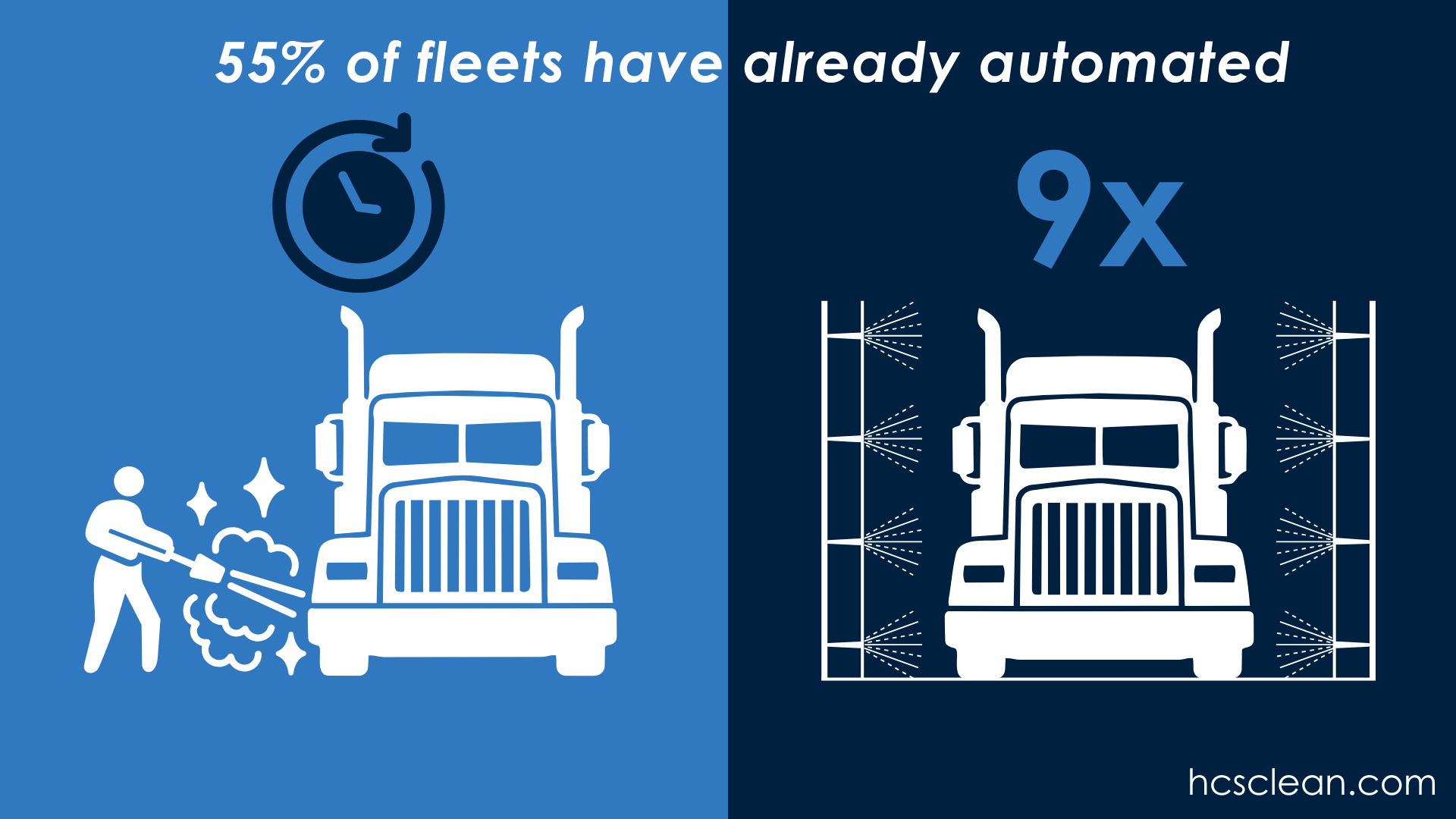
According to[Business Research Insights](https://www.businessresearchinsights.com/market-reports/truck-washing-system-market-120773), 55% of fleets have already adopted automated truck wash solutions, and the global truck washing system market is expected to grow from $443.12 billion in 2025 to $614.51 billion by 2034.
The equipment and soap do the cleaning work instead of your employees. Washing becomes [up to 9x faster than handwashing](https://blog.hydrochemsystems.com/automated-truck-wash-faqs), and the process is much simpler.
Automation creates a predictable budget line. When you can estimate how much water, time, and manpower it takes to clean the entire fleet, scheduling becomes easier and reduces downtime. It's a game-changer when you manage a large fleet.
The shift is clear: semi-automatic systems now account for 61% of installations, while fully automatic solutions represent 39%—showing rising demand for complete automation.
### When automation makes sense for your operation:
If you're washing 40+ trucks per week, calculate your current annual labor cost for washing. Then compare that to automation system costs. Many mid-sized fleets hit ROI in 18-24 months. The breakeven happens faster when you factor in reduced downtime and freed-up labor for revenue-generating work.
## **2. Controlling Operation Costs**
Product prices are climbing. Shipping costs are climbing. Labor costs are climbing. Every line item on your budget is under pressure.
While wages and benefits continue to rise, smart fleet operators are finding ways to reduce labor costs as a percentage of revenue. The key? Productivity improvements through automation and efficient processes.
According to the[Peterson Institute for International Economics](https://www.piie.com/blogs/realtime-economic-issues-watch/growing-gap-between-real-wages-and-labor-productivity), companies investing in productivity improvements see better labor cost efficiency even as wages rise.
The approach is simple: controlling labor costs through touchless washing, [2-step processes](https://hydrochemsystems.com/mobile-fleet-solutions/), and automated systems that help you wash faster. When your team can wash more trucks in less time, labor costs per vehicle drop—even as wages rise.
Bulk purchasing plays a major role, too. Buying concentrated products or ordering entire pallets of soap reduces your cost per gallon on shipping. It also protects you from supply chain problems.
The industry is moving beyond just comparing product prices. Now it's about looking at the total cost. A more expensive product that cuts wash time in half pays for itself quickly. Factor in labor savings, water usage, and downtime when choosing wash solutions.
The investment may seem high—[52% of operators cite installation costs as a barrier](https://www.businessresearchinsights.com/market-reports/truck-washing-system-market-120773)—but the long-term payoff in labor efficiency makes it worthwhile for operations washing fleets regularly.
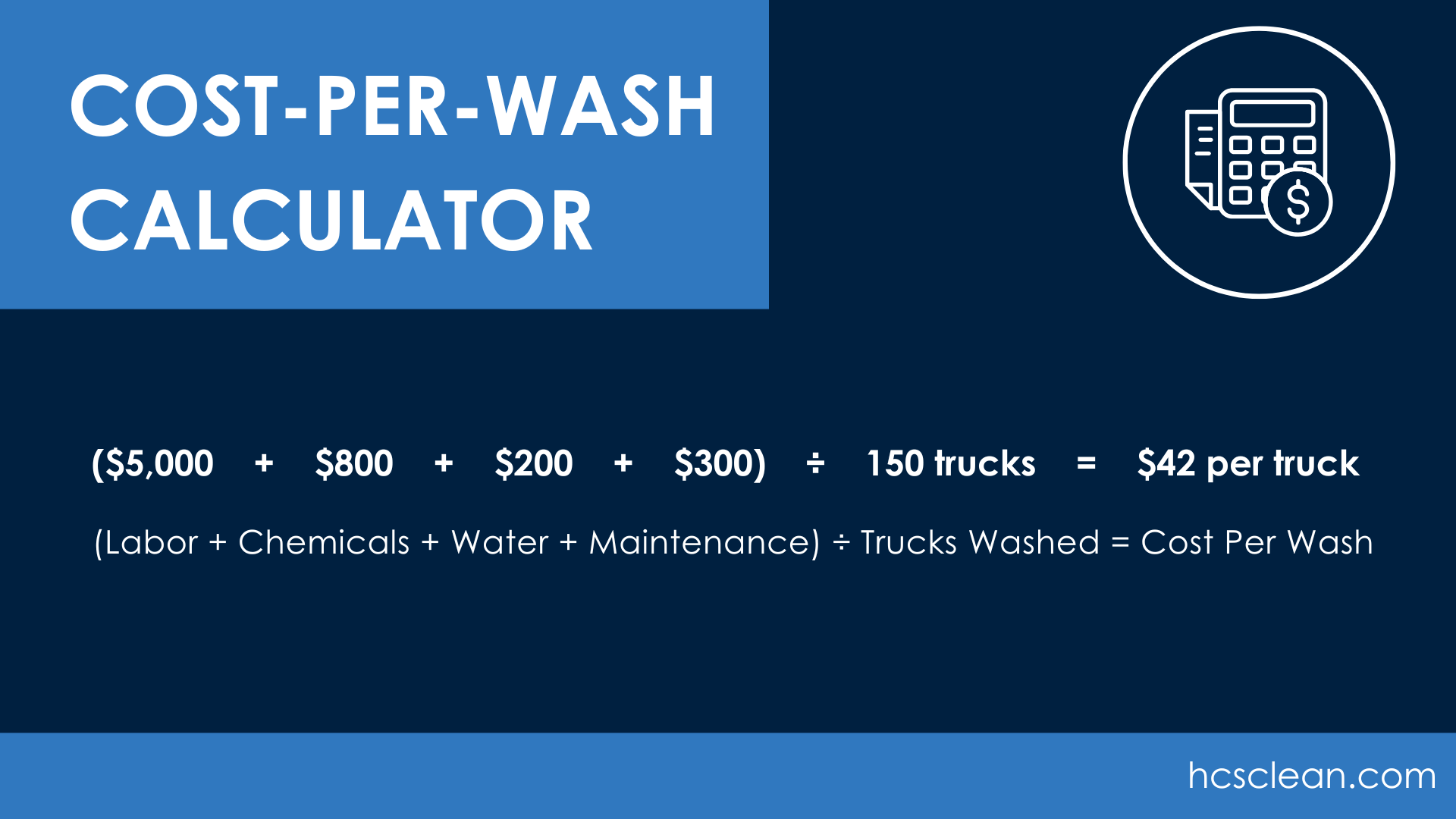
Calculate your cost-per-wash:
Total monthly spend (labor + chemicals + water + maintenance) divided by trucks washed. If that number keeps rising, start with concentrated products. Typically, they end up being around 20% cheaper per wash once diluted, and they reduce shipping costs and storage space.
You can also evaluate faster wash processes that free up capacity and labor.
## **3. Touchless Fleet Washing**
The appeal is obvious. No brushes. No physical scrubbing. No wearing down your team. No abrasive wear & tear on fleet graphics or decals. Quicker turnaround time. Touchless fleet washing is a very different process from manually brushing.
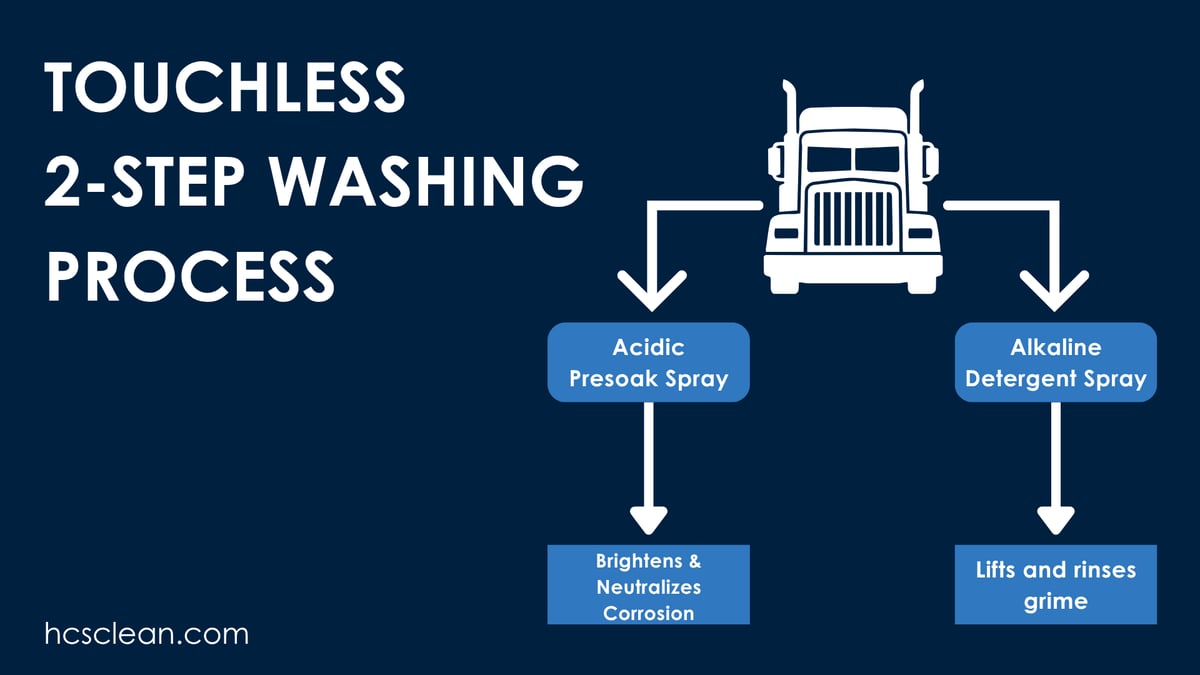
The most effective approach for mobile washers is usually a [2-step truck wash](https://blog.hydrochemsystems.com/what-is-2-step-washing) process. First, a low pH (acidic) pre-soak breaks down road film. Then, a high pH (alkaline) detergent lifts and rinses away the grime. This combination delivers a thorough clean without anyone touching the truck.
For trucks that aren't heavily soiled, or when you need faster turnaround, a 1-step touchless process that uses a high pH detergent works well. Many operators use the full 2-step on their weekly deep cleans. Then they switch to the simpler 1-step on-off weeks to keep vehicles presentable between major washes.
**Match your wash process to the soil level:**
Light dirt and routine maintenance? Use 1-step touchless. Heavy road film, salt, or grime? Use the full 2-step process.
## **4. Safer Chemistry Solutions**
One of the biggest shifts in truck washing has been the move toward safer chemistry that doesn't sacrifice cleaning power.
According to[Business Research Insights](https://www.businessresearchinsights.com/market-reports/truck-washing-system-market-120773), 58% of facilities are now shifting to eco-friendly detergents—a clear sign that the industry is moving away from hazardous chemicals.
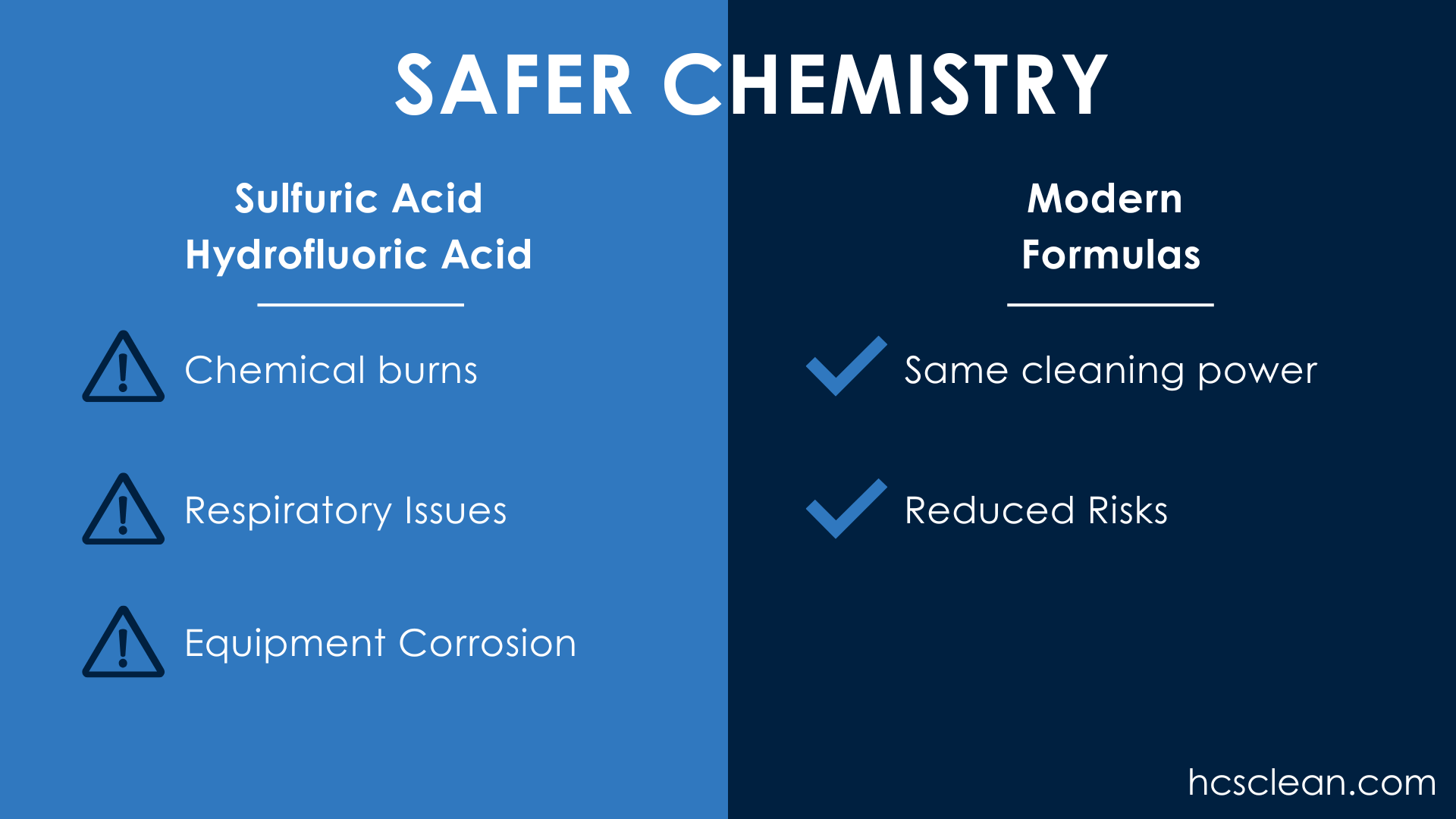
For years, the industry believed you needed the harshest chemicals to get a quality clean. We're talking sulfuric and hydrofluoric acid-based products as well as high concentrations of harsh caustics & solvents. These chemicals pose serious risks like chemical burns, respiratory problems, and equipment corrosion.
Fleet operators, mobile washers, and safety directors are learning the truth. Safer acid alternatives can deliver excellent cleaning results. They reduce health risks to workers. They cause less damage to wash equipment and vehicle finishes.
The shift comes down to matching your chemistry to your actual cleaning needs. Wash regularly and maintain your fleet? You often don't need the most hazardous products. Safer formulas can handle routine maintenance washing.
The trend toward safer chemistry isn't about compromising on cleanliness. Some situations call for more aggressive products—heavily soiled equipment, for example. But for regular washing schedules, safer alternatives deliver results without the risks.
**Review your current chemicals:**
If you're washing three or more times per week, you likely don't need the most aggressive products for routine maintenance. Safer alternatives handle regular cleaning while reducing worker safety risks and equipment wear.
## **5. Environmentally Conscious Truck Washing**
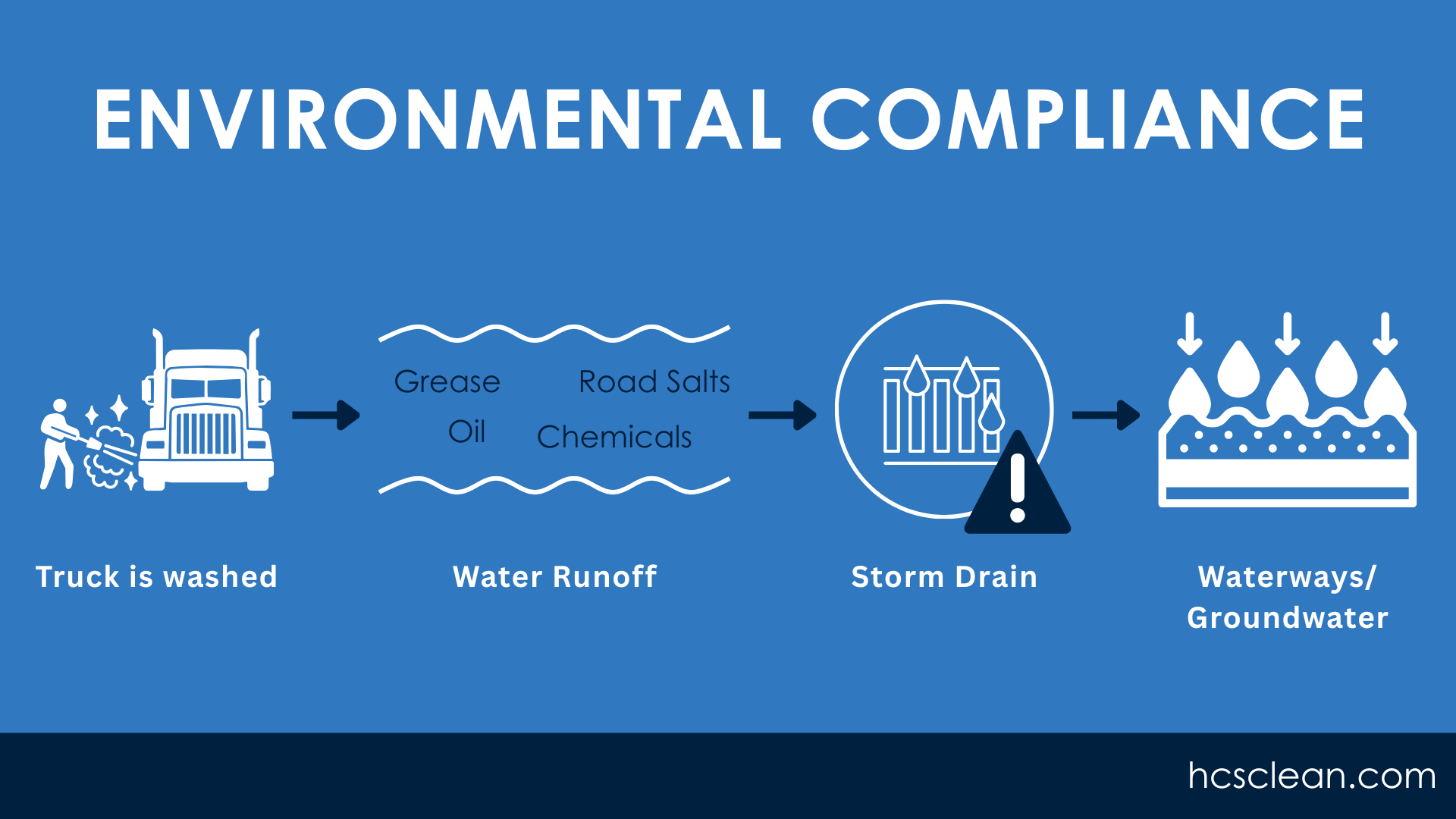
Clean water [regulations exist at every level of government](https://www.ncelenviro.org/articles/2024-legislative-session-recap/). Federal, state, and local. Municipalities are cracking down on commercial washing operations.
They're concerned about what's in the runoff.
When you wash trucks, you're not just rinsing away dirt. That water carries grease, oil, road salts, and other contaminants. If it flows untreated into storm drains, it gets into local waterways and groundwater.
The[heavy truck wash market](https://www.datainsightsmarket.com/reports/heavy-truck-wash-shampoo-814031) confirms this regulatory pressure is reshaping the industry. Stringent environmental regulations now favor biodegradable formulations and limit hazardous substances in wash chemicals.
Traditional truck wash chemicals add another problem. Strong low & high pH detergentsStrong acids and harsh preservatives don't just disappear when they go down the drain. They persist in the environment and can violate water quality standards as well as impacting waste water treatment systems.
That's why more operators are switching to biodegradable chemistry. At Hydro-Chem, we've developed formulas that break down naturally and make it easier to comply with laws in your area.
**Check your local requirements now:**
Your municipality can help you understand its storm drain discharge rules before you receive a violation notice. Switching to biodegradable formulas helps you stay compliant and avoid fines that can range from hundreds to thousands of dollars per violation.
## **Will These Trends Continue?**
The national [commercial vehicle wash market keeps expanding](https://www.technavio.com/report/car-and-truck-wash-market-industry-analysis). Growth is driven by fleet expansion, tighter environmental regulations, and the need to reduce costs.
We believe these trends will hold strong throughout 2026 and beyond. More businesses are experiencing the value of automated systems and more efficient—and safer—truck washing chemicals.
But there's more to fleet washing than great products. You need to find the right solution for your business. That depends on many factors. Your location. Your climate. The types of vehicles you wash.
## **Want to Optimize Your Fleet Wash Operation?**
At Hydro-Chem Systems, we've helped countless customers clean more for less. We take your needs into consideration and customize a fleet washing solution.
To find out what type of system works best for you, give us a call today at **616-531-6420**. Feel confident your fleet is spending less time in the garage and more time on the road.
Or [schedule a free wash review](https://hydrochemsystems.com/fleet-wash-efficiency-audit/) to discuss your specific fleet washing challenges with one of our experts.
### Hydro-Chem Systems
6605 Broadmoor Ave SE
Caledonia, MI 49316
**Monday – Friday**
8:00AM – 4:00PM
Phone: [616-531-6420](tel:6165316420)
**Service:** [833-427-3183](tel:8334273183)
**Email:** [info@hcsclean.com](mailto:info@hcsclean.com)
[Request a Quote](https://hydrochemsystems.com/contact-us/)
- Quick Links
- [About Us](https://hydrochemsystems.com/about-us/)
- [MICHIGAN FLEET WASH SOLUTIONS](https://hydrochemsystems.com/michigan-fleet-washing-solutions/)
- [FLEET WASH EFFICIENCY AUDIT](https://hydrochemsystems.com/fleet-wash-efficiency-audit/)
- [SERVICE DEPARTMENT](https://hydrochemsystems.com/service-department/)
- [PARTS & WASHERS](https://hydrochemsystems.com/parts-washers/)
- [DISTRIBUTION](https://hydrochemsystems.com/distribution/)
- [CONTACT US](https://hydrochemsystems.com/contact-us/)
### What Our Customers Think
[](https://admin.trustindex.io/api/googleReview?place-id=ChIJ1aYrzfmzGYgREwW4ELjXPEY)
[Leave us a Review](https://search.google.com/local/writereview?placeid=ChIJ1aYrzfmzGYgREwW4ELjXPEY)
[](https://hydrochemsystems.com/)
2026 HYDRO-CHEM SYSTEMS | [PRIVACY POLICY](https://hydrochemsystems.lkfhosting.com/privacy-policy/)
```json
{
"@context" : "https://schema.org",
"@type" : "BlogPosting",
"author" : {
"@type" : "Person",
"name" : "Chad Reiffer",
"url" : "https://blog.hydrochemsystems.com/author/chad-reiffer"
},
"dateModified" : "2026-06-23T12:42:10.791Z",
"datePublished" : "2026-02-10T13:15:00.000Z",
"headline" : "The Top 5 Truck Wash Trends of 2026",
"image" : [ "https://blog.hydrochemsystems.com/hubfs/2026%20Trucking%20Trends%20(1).png" ],
"mainEntityOfPage" : {
"@id" : "https://blog.hydrochemsystems.com/top-5-truck-wash-trends-of-2026",
"@type" : "WebPage"
},
"publisher" : {
"@type" : "Organization",
"logo" : {
"@type" : "ImageObject",
"url" : "https://blog.hydrochemsystems.com/hubfs/Hydro-Chem%20Systems%20Logo%20Transparent%20Background.png"
},
"name" : "Hydro-Chem Systems Inc. "
}
}
```